 Posted by
 Bisons in Poland are one of the country’s most impressive natural attractions. The European bison (Bison bonasus), also known as the wisent, is the largest land mammal in Europe and a symbol of successful wildlife conservation. While most travelers focus on cultural highlights such as Wawel Castle, the Main Market Square or Kazimierz, Poland also offers a rare opportunity to see wild European bison roaming freely in ancient forests.
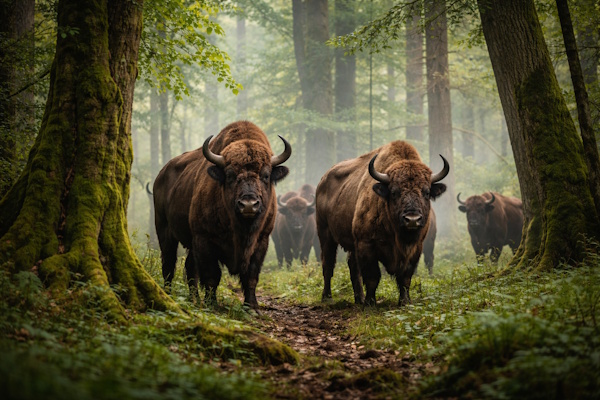
This detailed guide explains where to see bison in Poland, how to reach them from Krakow, the history of their near extinction, practical travel planning, safety rules and whether visiting European bison is worth adding to your itinerary.
🌲 Nature & Wildlife Experiences from Krakow
Explore day trips and nature-focused tours around southern Poland.
🏨 Accommodation in Krakow
Use Krakow as your base before heading into the countryside.
| Topic | Link |
|---|---|
| Animals | Animals in Poland |
| Moose (Elk) | Moose in Poland |
| Bisons | Bisons in Poland |
| Storks | Storks in Poland |
What Is the European Bison (Bison bonasus)?
The European bison is the heaviest wild land animal in Europe. Adult males can weigh between 700 and 900 kilograms, with some exceptional individuals exceeding this range. Females are smaller but still significantly larger than domestic cattle.
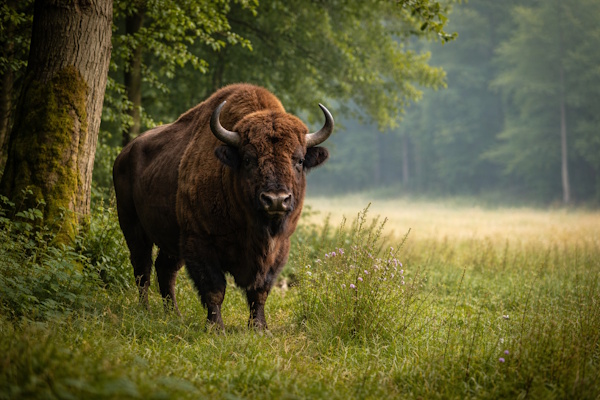
Unlike the American bison, which primarily inhabits open plains, the European species is adapted to mixed forests and woodland edges. It feeds on grasses, leaves, bark and shrubs and plays a crucial ecological role in shaping forest ecosystems.
From Extinction to Recovery – The History of Bison in Poland
By the early 20th century, European bison had disappeared from the wild due to hunting and habitat loss. The last wild bison in Poland were killed during World War I.
Only a small number survived in zoos and private collections. Through coordinated breeding programs, Poland became a central country in the species’ recovery. Reintroduction began in the 1950s, particularly in Białowieża Forest.
Today, Poland hosts one of the largest free-ranging populations of European bison worldwide. The species is still monitored and protected.
Where to See Bisons in Poland
Białowieża Forest (Eastern Poland)
Białowieża National Park is the most famous location for observing European bison. This UNESCO-listed primeval forest spans the border between Poland and Belarus. The forest contains ancient trees and diverse wildlife.
Distance from Krakow: approximately 6–7 hours by car.
Bieszczady Mountains (Southeastern Poland)
The Bieszczady region also hosts wild bison herds. This area is less touristy than Białowieża and offers mountain landscapes and remote valleys.
Controlled Environments Near Krakow
If you cannot travel far, the Krakow Zoo provides an opportunity to see European bison in a managed setting.
Can You See Wild Bison on a Day Trip from Krakow?
No. Wild bison populations are located several hours away. However, Krakow is an excellent base for combining cultural attractions such as the Cloth Halls, the Underground Museum and Schindler’s Factory before heading into the countryside.
How to Plan a Bison Trip from Krakow
Option 1 – Self-Drive (Most Flexible)
Rent a car and drive east to Białowieża. Plan at least 2–3 days.
Option 2 – Train + Local Transfer
Take a train from Krakow to Warsaw or Białystok and continue by bus.
Option 3 – Organized Wildlife Tour
Specialized tours focus on tracking wildlife with local guides.
Best Time of Year to See Bison
- Winter: Easier spotting against snow
- Spring: Increased activity
- Early morning and late afternoon: Highest movement
Behavior and Safety
European bison are generally calm but can be unpredictable if approached. Keep at least 50 meters distance. Never approach calves.
Ecological Importance
Bison influence forest structure by grazing and breaking vegetation. This creates habitats for birds and smaller mammals, increasing biodiversity.
Combining Wildlife with Cultural Highlights
Many visitors combine nature trips with Krakow attractions such as:
Pros & Cons of Visiting Bison Areas
Pros
- Unique European wildlife experience
- Educational conservation story
- Less crowded than city attractions
Cons
- Long travel distance from Krakow
- No guaranteed sightings
Is It Worth Visiting?
If you are interested in wildlife and conservation, seeing European bison in Poland is worthwhile. It adds depth to a trip that may otherwise focus exclusively on historic city attractions such as Wawel Cathedral or the Sigismund Bell.
FAQ – Bisons in Poland (European Bison / Bison bonasus)
What is the European bison?
The European bison (Bison bonasus), also called the wisent, is the largest land mammal in Europe. It once roamed across large parts of the continent but survived the 20th century only through breeding programs. Today, Poland is one of the most important countries for its conservation.
How big are European bison?
Adult males can weigh between 700 and 900 kilograms and stand nearly two meters tall at the shoulder. Females are smaller but still significantly larger than domestic cattle.
Are bison the same as buffalo?
No. European bison are not buffalo. Buffalo species live mainly in Africa and Asia. The European bison is a distinct species adapted to European forest ecosystems.
Where do bison live in Poland?
The largest population lives in Białowieża Forest in eastern Poland. Additional herds exist in the Bieszczady Mountains and selected forest reserves in northeastern regions.
Can I see wild bison near Krakow?
There are no wild bison living near Krakow. The closest wild populations are several hours away. However, you can see bison at the Krakow Zoo.
How far is Białowieża from Krakow?
The drive takes approximately 6–7 hours by car. Public transport is possible but requires transfers.
Is it possible to visit Białowieża on a day trip from Krakow?
Not realistically. Due to the long travel distance, at least two or three days are recommended.
What is the best time of year to see bison?
Winter offers better visibility because animals stand out against the snow. Early morning and late afternoon are generally the best times for sightings.
Are bison dangerous?
European bison are wild animals and can be dangerous if approached too closely. Visitors should keep a distance of at least 50 meters and follow park regulations.
Do bison attack humans?
Attacks are extremely rare but can happen if animals feel threatened. Maintaining distance and avoiding sudden movements reduces risk.
How many bison live in Poland?
Poland has one of the largest free-ranging populations in the world, with several thousand individuals across different regions.
Why did European bison become extinct in the wild?
Overhunting and habitat destruction led to their extinction in the wild in the early 20th century. Conservation breeding programs later reintroduced them.
What do bison eat?
Bison feed on grasses, herbs, leaves, bark and shrubs. They are herbivores and play an important ecological role by shaping forest vegetation.
How long do European bison live?
In the wild, they typically live 15–20 years. In controlled environments, they may live slightly longer.
Are European bison protected?
Yes. They are protected under national and international conservation laws. Hunting is prohibited.
Can I photograph bison?
Yes, photography is allowed in national parks, but drones may require special permits. Always keep a safe distance.
Do I need a guide to see bison?
Guided tours increase the chances of sightings, especially in Białowieża Forest. Independent visitors can also explore marked trails.
Are there viewing platforms?
Some areas have observation points, but bison roam freely and are not confined to specific zones.
Can children join bison tours?
Yes, but supervision is essential. Wildlife areas require calm behavior and respect for safety guidelines.
Are bison active all year?
Yes. They do not hibernate and can be seen year-round.
What is the difference between the American and European bison?
The European bison is generally taller and more adapted to forest environments, while the American bison historically lived on open plains.
Can I combine a wildlife trip with Krakow sightseeing?
Yes. Many visitors explore major sights such as Wawel Castle, the Cloth Halls and the Underground Museum before heading into the countryside.
Are sightings guaranteed?
No. Bison are wild animals and move freely within forests. Even guided tours cannot guarantee sightings.
Is winter too cold for a visit?
Winter temperatures can be low, but visibility is often better. Proper clothing is essential.
Is visiting bison areas worth it?
For travelers interested in nature and conservation, visiting bison habitats offers a unique perspective beyond urban attractions such as Krakow’s top sights.
Conclusion
Bisons in Poland represent one of Europe’s most significant wildlife recovery stories. While they require travel beyond Krakow, the experience offers insight into conservation, ecology and Poland’s natural heritage. For travelers seeking more than urban sightseeing, adding a bison-focused trip can provide a memorable and educational contrast to Krakow’s historic core.