 Posted by
 The Cloth Halls Krakow, known in Polish as Sukiennice, are one of the most recognizable landmarks in the city and the architectural centerpiece of Rynek Główny (Main Market Square).
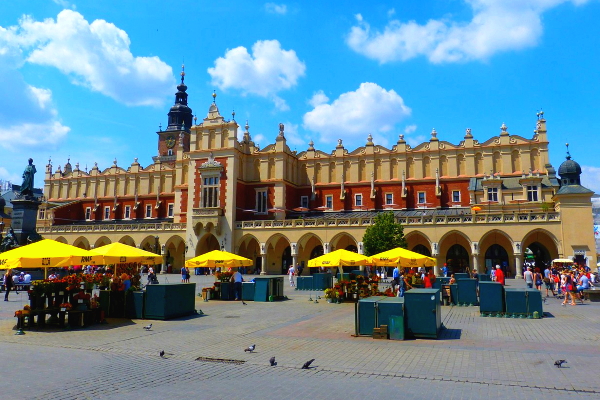
Located in the heart of the Old Town, the Cloth Hall has served as a trading center since the Middle Ages and remains an active commercial and cultural space today. If you are visiting Krakow, the Sukiennice are impossible to miss — both physically and historically.
🎟 Krakow Tours & Attractions
Find guided Old Town tours, museum tickets and Auschwitz day trips.
🏨 Hotels Near Market Square
Stay in Krakow Old Town for direct access to the Cloth Hall and main attractions.
Where Are the Cloth Halls Located?
The Cloth Halls stand in the center of Krakow’s Main Market Square, the largest medieval market square in Europe. The building divides the square into two symmetrical halves and is surrounded by key landmarks such as St. Mary’s Basilica and the Town Hall Tower.
Because of its central position, the Sukiennice are within walking distance of Wawel Castle and the historic district of Kazimierz.
History of the Cloth Halls
The original Cloth Hall dates back to the 13th century, shortly after Krakow was rebuilt under Magdeburg law. The square became a major trade center connecting Western Europe and the East.
Merchants sold cloth, spices, silk, wax, leather and imported goods. Krakow’s strategic location made it a key commercial hub along major trade routes.
The Gothic structure was later rebuilt in Renaissance style in the 16th century after a fire. The arcaded loggias and decorative attic added during this renovation define the building’s current appearance.
In the 19th century, further renovations transformed parts of the building into exhibition spaces. Today, the Cloth Hall combines historical architecture, active market stalls and museum spaces.
Architecture and Design
The current building is primarily Renaissance in style. The decorative attic with carved masks and ornaments crowns the structure. The symmetrical arcades along both sides create shaded walkways.
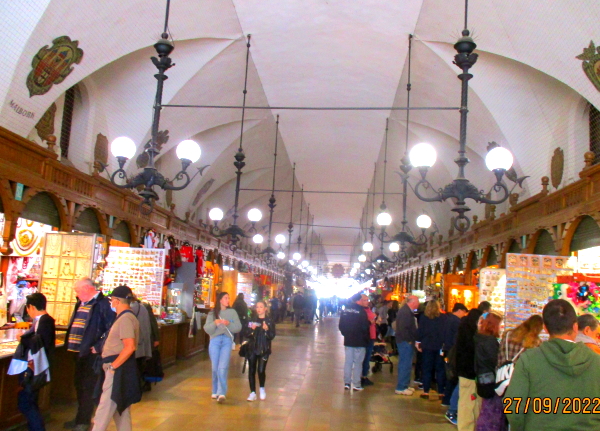
The interior consists of a long central hall with market stalls. The upper floor houses the Gallery of 19th-Century Polish Art, part of the National Museum in Krakow.
Below the Cloth Hall lies the Rynek Underground Museum, which reveals medieval foundations and archaeological remains.
What Can You See Inside the Cloth Halls?
Ground Floor Market Stalls
The central hall is lined with stalls selling souvenirs, amber jewelry, handicrafts, wooden carvings and traditional Polish items. While many products target tourists, the market continues a trading tradition that spans over 700 years.
Gallery of 19th-Century Polish Art
Located upstairs, this gallery displays important works of Polish painters and sculptors from the Romantic and Realist periods.
Underground Archaeological Museum
Directly beneath the building, visitors can explore preserved medieval streets and artifacts.
How Long Should You Plan?
- 15–30 minutes for a quick walk through the market stalls.
- 1–1.5 hours including the art gallery.
- 2–3 hours if combining with the Underground Museum.
Best Time to Visit
- Morning for fewer crowds.
- Evening for atmospheric lighting around the square.
- Winter for Christmas market atmosphere.
Practical Visitor Tips
- Compare prices before purchasing souvenirs.
- Visit the upper gallery for cultural depth.
- Combine with nearby attractions such as Top 10 Sights in Krakow.
- Allow extra time during peak tourist season.
Combine the Cloth Halls with Nearby Attractions
Pros & Cons of Visiting the Cloth Halls
Pros
- Central landmark of Krakow
- Free access to market hall
- Historical architecture
- Combination of shopping and culture
Cons
- Tourist-focused souvenir stalls
- Crowded during peak season
Is the Cloth Hall Krakow Worth Visiting?
Yes. Even if you do not intend to shop, the Cloth Hall is an essential part of Krakow’s identity. It represents the city’s medieval trading history and remains the symbolic center of the Old Town.
For first-time visitors, walking through the Sukiennice is almost unavoidable and provides a direct connection to centuries of commercial tradition.
FAQ – Cloth Halls Krakow (Sukiennice)
What are the Cloth Halls in Krakow?
The Cloth Halls, known in Polish as Sukiennice, are a historic market building located in the center of Main Market Square (Rynek Główny). For centuries, they served as the city’s main trading hub. Today, they combine souvenir stalls, historical architecture and an art gallery.
How old are the Cloth Halls?
The original Cloth Hall dates back to the 13th century, shortly after Krakow was reorganized under Magdeburg law. The current Renaissance-style structure was largely shaped in the 16th century after a fire damaged the earlier Gothic building.
Where exactly are the Cloth Halls located?
The building stands in the center of Krakow’s Main Market Square. It divides the square into two halves and is surrounded by landmarks such as St. Mary’s Basilica and the Town Hall Tower.
Is entry to the Cloth Halls free?
Yes, entry to the ground-floor market hall is free. Visitors can walk through the building without purchasing a ticket. The upper-floor art gallery requires paid admission.
What can you buy inside the Cloth Halls?
The stalls sell souvenirs, amber jewelry, wooden carvings, handicrafts, magnets, traditional Polish items and decorative objects. Prices may vary, so comparing offers is recommended.
Is the Cloth Hall still an active market?
Yes, although it primarily serves tourists today. Historically, it was a major trading center for cloth, spices and imported goods along European trade routes.
What is on the upper floor of the Cloth Halls?
The upper floor houses the Gallery of 19th-Century Polish Art, part of the National Museum in Krakow. It displays paintings and sculptures from important Polish artists.
Is there anything underneath the Cloth Halls?
Yes. Beneath the building lies the Rynek Underground Museum, which presents medieval archaeological remains and historic street levels.
How long should I spend at the Cloth Halls?
A quick walk through the market hall takes 15–30 minutes. If you visit the art gallery or combine it with the Underground Museum, plan up to 2–3 hours.
Are the Cloth Halls suitable for children?
Yes. Children often enjoy the lively market atmosphere. The Underground Museum beneath the square may also be interesting for school-age visitors.
Are the Cloth Halls open every day?
The market stalls are generally open daily, though exact hours may vary. The art gallery follows specific opening hours and may close on certain weekdays or public holidays.
Is the building wheelchair accessible?
The ground floor is accessible. Access to the upper gallery is possible via stairs or elevator, depending on current facilities.
Can the Cloth Halls be combined with other attractions?
Yes. They are centrally located and easily combined with Wawel Castle, Kazimierz and other top sights in Krakow.
Is the Cloth Hall worth visiting?
Yes. Even without shopping, the Cloth Halls are an essential historical landmark. They represent Krakow’s medieval trading history and remain the symbolic center of the Old Town.
When is the best time to visit?
Morning hours are usually less crowded. In December, the surrounding square hosts a Christmas market, creating a festive atmosphere.
Can you take photos inside?
Yes, photography is generally allowed in the market hall. Rules may differ in the art gallery upstairs.
Can it be combined with other attractions?
Yes, it is centrally located and easily combined with other Old Town landmarks.