Krakow Main Market Square (Rynek Główny): Complete Visitor Guide

Posted by

Krakow Main Market Square (Rynek Główny) is the historic center of the city and the place most travelers picture when they think of Krakow’s Old Town: a vast medieval square, surrounded by landmark churches, museums, cafés, and busy streets that lead into the UNESCO-listed core of the city. If you are visiting Krakow for the first time, Rynek Główny is the most practical starting point for sightseeing, orientation, and short walks that connect many of the city’s top attractions.

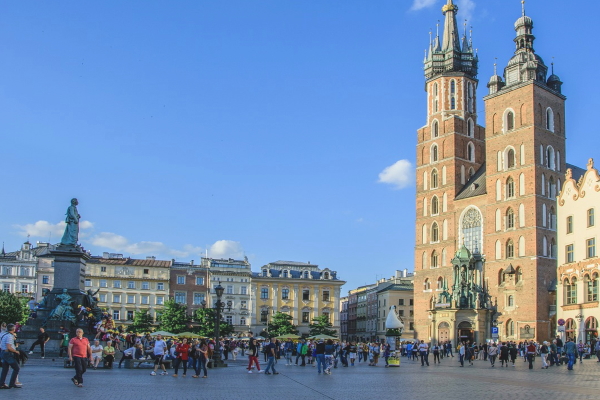
krakow market square, main square

This guide explains what to see at the square, how to plan your visit, the best times to go, how long to stay, and how to combine it with nearby sights. It also includes realistic tips on crowds, costs, safety, and where Rynek Główny fits into a longer Krakow itinerary.

Krakow tours starting at the Old Town

Walking tours and short city experiences are an easy way to understand the Old Town layout and the history around Rynek Główny.

Browse Krakow tours on GetYourGuide

Hotels in Poland

If you want to stay close to the Old Town, compare accommodation options early, especially for weekends and summer.

Search hotels in Poland


Location and how to get there

Rynek Główny sits in the center of Krakow’s Old Town (Stare Miasto). Most visitors arrive on foot from nearby streets such as Floriańska, Grodzka, or Szewska. If you are coming from a hotel outside the Old Town, the easiest approach is usually public transport to the city center and then a short walk.

For a step-by-step overview of arriving in the city (airport, train station, buses, and transfer options), use this practical page: Krakow directions.

If you drive, note that parts of the Old Town have restricted access and parking is limited. Plan your parking strategy before you enter the central area: parking in Krakow.

Orientation on the square

The square is large and easy to navigate. A simple way to orient yourself is to identify three main landmarks:

  • Cloth Hall (Sukiennice) in the middle of the square.
  • St. Mary’s Basilica on the eastern side.
  • Town Hall Tower near the western side.

If you are building a sightseeing plan, it helps to keep Rynek Główny as your “base.” Many routes naturally loop back here, especially if you combine museums, restaurants, and evening walks.


History and background

Rynek Główny was laid out in the 13th century after Krakow received city rights and developed a structured urban plan typical of medieval Central Europe. The square became the city’s main trading and civic space, connecting merchants, craftsmen, officials, and visitors from across Europe. Its scale is one reason it still feels impressive today: this was not a small market for local trade, but a central stage for a powerful regional city with international connections.

Over centuries, Rynek Główny served multiple roles. It was a marketplace, a place for ceremonies, a location for public announcements and events, and the surrounding area developed into one of the most prestigious parts of the city. Even as Krakow evolved and expanded beyond the medieval walls, the square remained a symbolic heart of the city and a practical meeting point.

Modern Krakow is a living city, not an open-air museum. That is why the square often feels busy: local life and tourism overlap. You might see office workers passing through, students meeting friends, and tour groups moving between the main monuments. This mix is part of the appeal, but it also means you should plan your visit with realistic expectations about crowds during peak periods.


Main attractions and highlights on Rynek Główny

1) Cloth Hall (Sukiennice)

The Cloth Hall is the central building on the square and one of Krakow’s most recognizable landmarks. Historically, it was a key trading hall where merchants sold cloth and other goods. Today, the ground level is lined with stalls that focus mostly on souvenirs, crafts, and products aimed at visitors. Even if you do not plan to buy anything, it is worth walking through once to understand how the building is structured and to enjoy the arcades.

If you want details on the building, its function, and what you can realistically expect inside, see: Cloth Halls in Krakow.

2) St. Mary’s Basilica

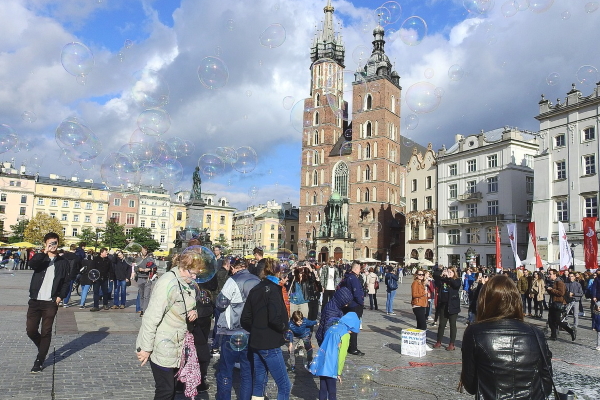
St. Mary’s Basilica (Kościół Mariacki) stands on the eastern side of the square. It is one of the city’s major churches and one of the best-known buildings in Poland. Visitors are often drawn by the façade and the interior, which includes a famous Gothic altarpiece. Even if you only view the exterior, the basilica helps define the visual identity of the square.

krakow main market with maria church

A practical visitor overview is here: St. Mary’s Church Krakow.

3) Town Hall Tower

The Town Hall Tower is the remaining part of the medieval town hall complex that once stood on the square. Today, it provides a historical anchor and a viewpoint. If you enjoy city panoramas, climbing the tower is a straightforward activity that can fit into even a short Krakow stay. The climb is not long, but it does include steps, so it may be less ideal for visitors with mobility issues.

4) Rynek Underground Museum

One of the most interesting ways to understand Rynek Główny is to go below it. The underground museum presents archaeological layers and explains how the city evolved around trade routes, infrastructure, and everyday life. It is especially useful if you are visiting with teenagers or anyone who prefers interactive museum experiences over traditional display cases.

Planning tip: tickets and time slots can matter in peak season. Use this dedicated page: Underground Museum Krakow.

5) Adam Mickiewicz Monument

In the center area of the square, the Adam Mickiewicz Monument functions as a popular meeting point. You will often hear locals say “meet under Adam” as a simple instruction. It is a practical place to regroup if you are traveling with friends or family and want a clear reference point.

6) Street atmosphere: cafés, musicians, and seasonal markets

Rynek Główny is not only about monuments. Much of the experience is simply being there: sitting in a café, watching the light change on historic buildings, listening to street musicians, and observing the pace of the Old Town. In warmer months, outdoor seating dominates the edges of the square. In winter, seasonal stalls and holiday events can change the look and feel dramatically.

If you want a broader overview of the city’s key sights (beyond the square), this page helps you plan: Top 10 sights in Krakow.


Practical visitor tips

Start early for a calmer experience

Rynek Główny can be crowded from late morning to late afternoon, especially on weekends and during summer. If you want photos with fewer people and a quieter atmosphere, visit early in the morning. The square feels more local then: delivery vehicles, café staff setting up terraces, and locals crossing the Old Town on their way to work.

Plan your museum visits around time slots

For the most popular indoor attractions near the square, it is smart to check opening times and ticket rules. This is especially relevant if you travel in high season or around holidays. For a practical overview of typical opening patterns and local specifics, see: Krakow opening hours.

Eat well without paying only for the view

Restaurants directly on the square often charge higher prices, mainly for location. This does not mean the food is bad, but value can be better one or two streets away. If you want a realistic overview of typical local dishes and what to try, use: Krakow food.

Be aware of common tourist traps

  • Overpriced menus at the most central terraces. Check prices before you sit down.
  • Currency exchange offers in busy areas. Use reputable exchange offices and compare rates.
  • Pushy invitations from staff outside restaurants or bars. You are not obliged to respond.

Safety: what is realistic?

Rynek Główny is generally safe and well-lit, with many people around in the evening. Still, basic city precautions apply: keep an eye on your phone and wallet in crowded areas, especially during events and peak tourist periods. If you travel with children, agree on a meeting point (the Mickiewicz monument is an easy choice) in case you get separated.

Accessibility considerations

The square’s surface includes cobblestones and uneven sections. Most areas are manageable, but people with limited mobility may find it tiring. If you need step-free planning, consider focusing on the open-air experience of the square and choosing one or two indoor attractions that are easiest for your situation.

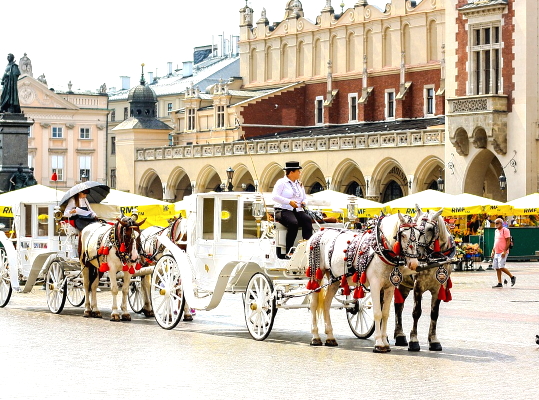
krakow carriages waiting for customers


Best time to visit Rynek Główny

By time of day

  • Early morning: best for photos and a calmer atmosphere.
  • Late morning to afternoon: busiest period with many tour groups.
  • Evening: attractive lighting, lively cafés, and a classic Old Town feel.

By season

  • Spring: pleasant temperatures, increasing daylight, moderate crowds.
  • Summer: peak tourism, vibrant atmosphere, but crowded and more expensive.
  • Autumn: often a good balance of weather and fewer visitors.
  • Winter: colder, shorter days; seasonal events can be atmospheric, especially around holidays.

If your trip is flexible, consider weekdays outside school holidays for the most comfortable experience. If you must visit on a weekend, aim for early morning or later evening.


How long should you stay?

How long you spend at Rynek Główny depends on your travel style:

  • Quick orientation (20–40 minutes): walk the square, view the main buildings, and continue to nearby streets.
  • Classic visit (1.5–3 hours): include the Cloth Hall, a church visit, a coffee stop, and time for photos.
  • Half-day plan (4–5 hours): combine the underground museum, a tower climb, lunch, and a longer Old Town walk.

Many travelers return multiple times: daytime for sightseeing, evening for atmosphere. This is one reason it helps to book accommodation within walking distance if your budget allows.


Suggested walking route around the square

If you want a simple plan that avoids backtracking, this route works well:

  • Start at the edge of the square and do a slow loop to get a first impression.
  • Walk through the Cloth Hall arcades.
  • Visit St. Mary’s Basilica (or at least the exterior and the area around it).
  • Continue to the Town Hall Tower area.
  • If you want a museum experience, go to the underground museum afterward.
  • Finish with a café stop either directly on the square or one street away for better value.

To expand the route into a full day, connect Rynek Główny with nearby districts and landmarks using the links below.


Combine Rynek Główny with other Krakow attractions

Wawel Castle and the river area

Wawel Hill is within walking distance from the Old Town and makes a natural next step after visiting the square. You can easily turn your Rynek visit into a longer sightseeing day by walking down Grodzka Street toward Wawel.

Start here if you want details and planning help: Wawel Castle.

Kazimierz district

Kazimierz is a popular area for evening walks, cafés, and a different atmosphere compared to the formal Old Town. If you want to add variety to your stay, combine the square with Kazimierz on the same day: old-town monuments first, then Kazimierz later for dinner and a more local feel.

Plan your visit here: Kazimierz.

Organized city tours

If you prefer structured sightseeing (especially on a short trip), a guided city tour can help you connect the stories behind the buildings and understand how the Old Town developed. Many tours use the square as a starting point because it is central and easy to find.

See options here: city tours in Krakow.

Day trips from Krakow

Rynek Główny is also the natural place to plan excursions, because many transport connections and tour meeting points are nearby. If you are deciding how to use an extra day, start with this overview: Krakow day trips.

One classic nature-oriented option is a trip toward the mountains. If that is your plan, this page is useful: Zakopane bus tour.

Wieliczka Salt Mine as an easy add-on

If you want a major attraction that is straightforward to reach from Krakow, Wieliczka is one of the most common additions to an Old Town itinerary. It pairs well with a Rynek visit because you can do the salt mine on one half-day and the Old Town on the other.

Details are here: Wieliczka Salt Mine.


Costs and budgeting: what to expect

Rynek Główny is free to visit as an open public space. Costs depend on what you do around it:

  • Museums and towers: ticket prices vary and can change by season or exhibition.
  • Food and drinks: more expensive directly on the square; better value nearby.
  • Guided tours: range from short walks to longer themed tours.
  • Souvenirs: generally higher prices in the central arcades.

If you want a broader sense of how much a trip to Poland costs (meals, transport, general spending), this page is helpful: Poland travel costs.


Pros and cons of visiting Rynek Główny

Pros

  • Central and easy to reach: a practical base for exploring the Old Town.
  • High concentration of landmarks: major attractions are within a few minutes’ walk.
  • Strong atmosphere: the square feels alive throughout the day and evening.
  • Flexible experience: you can enjoy it for free or build a full sightseeing plan around it.

Cons

  • Crowds: especially in summer and on weekends.
  • Higher prices: restaurants and cafés in the most central spots can be expensive for Poland.
  • Tourist-focused shopping: some stalls and shops are mainly aimed at visitors.

Is it worth visiting?

Yes, Rynek Główny is worth visiting for almost every traveler, because it is the most iconic and practical place to start in Krakow. Even if you are not deeply interested in history, the square helps you understand the city layout quickly. If you enjoy architecture, it is one of the most visually impressive urban spaces in Central Europe. If you prefer relaxed travel, it offers an easy “one-stop” experience: monuments, cafés, and short walking routes in every direction.

The best strategy is to visit more than once: a calm morning walk for photos and orientation, and an evening visit for atmosphere. That way, you experience the square without feeling pressured to do everything at the busiest time of day.


FAQ

Is Krakow Main Market Square really one of the largest medieval squares in Europe?

It is widely described as one of the largest medieval town squares in Europe. What matters for visitors is the scale: it feels unusually open and spacious for an Old Town square, and you can comfortably spend time there without feeling confined.

Do I need a ticket to enter Rynek Główny?

No. The square is a public space and free to enter at any time. Tickets apply only for indoor attractions such as museums, towers, or church visits where entry is regulated.

What is the best time for photos?

Early morning is usually best for photos with fewer crowds. Late evening can also be excellent because the buildings are illuminated and the atmosphere feels classic, especially in good weather.

Is the square safe at night?

In general, yes. It is well-lit and busy with people. As in any tourist-heavy location, basic precautions are sensible: keep valuables secure and be aware of pickpocket risk during crowded events.

Where should I eat if I want better value?

Restaurants directly on the square are convenient but often more expensive. For better value, walk one or two streets away and compare menus. If you want a practical overview of local dishes, see: Krakow food.

Can I combine the square with Wawel Castle on the same day?

Yes, it is one of the most common combinations. Many visitors start at the square and then walk to Wawel in the same day. Planning help is here: Wawel Castle.

What should I do if I have only one day in Krakow?

A realistic one-day plan is: Rynek Główny and the main Old Town highlights in the morning, a museum visit (such as the underground museum) around midday, then Wawel or Kazimierz in the afternoon, and a final evening walk back through the square.