 Posted by
 Understanding the currency in Poland is essential for every traveler. Whether you are planning a city trip to Warsaw, exploring Krakow’s Old Town, relaxing on the Baltic Sea or visiting national parks, knowing how the Polish Zloty (PLN) works will help you avoid hidden fees and manage your travel budget efficiently.
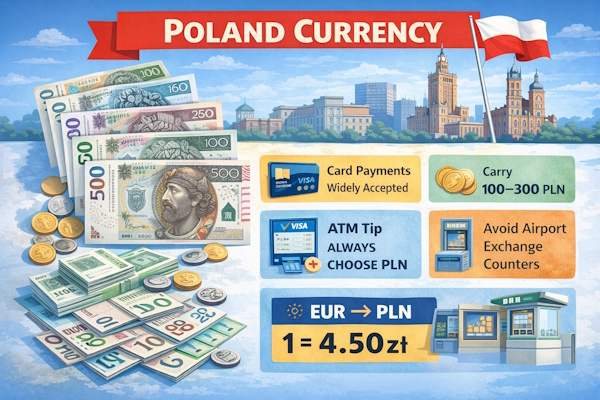
Poland is part of the European Union but does not use the Euro. The official currency is the Polish Zloty (PLN). This comprehensive guide explains exchange rates, ATM withdrawals, card payments, cash usage, dynamic currency conversion, regional price differences and practical tips to save money during your trip.
What Is the Currency in Poland?
- Currency name: Polish Zloty
- Currency code: PLN
- Symbol: zł
- Subdivision: 1 złoty = 100 groszy
Banknotes in circulation include 10, 20, 50, 100, 200 and 500 złoty. Coins include 1, 2 and 5 złoty as well as smaller grosz coins.
Does Poland Use the Euro?
No. Poland does not use the Euro.
Some tourist-oriented hotels may accept Euro, but exchange rates are typically unfavorable. All standard transactions are conducted in PLN.
PLN Exchange Rate – What You Should Know
The exchange rate of the Polish Zloty fluctuates daily depending on global markets and economic conditions. Always check real-time rates through reliable financial sources or your banking app before exchanging larger amounts.
Cash or Card in Poland?
Poland is highly card-friendly. Contactless payment is standard even in small shops.
Where Card Payments Are Accepted
- Supermarkets
- Restaurants
- Hotels
- Shopping malls
- Gas stations
- Public transport ticket machines
- Tourist attractions
See also: Supermarkets in Poland
When You Should Carry Cash
- Small rural shops
- Local markets
- Some parking meters
- Very small guesthouses
Carrying 100–300 PLN in cash is usually sufficient.
Best Way to Get Polish Zloty
1. ATM Withdrawal (Recommended)
Withdrawing PLN from an ATM in Poland usually provides a competitive exchange rate.
Important:
- Always decline dynamic currency conversion
- Choose to be charged in PLN
- Let your bank apply the exchange rate
2. Exchange Offices (Kantor)
Exchange offices are common in cities. Compare rates before exchanging money.
3. Avoid Airport Exchange Counters
Airport exchange counters often offer poor rates.
Dynamic Currency Conversion Explained
When paying by card, terminals may ask if you want to pay in your home currency. Always select PLN. Choosing your home currency typically results in hidden fees of 5–10%.
Is Poland Expensive?
Compared to Western Europe, Poland is affordable.
Typical prices:
- Coffee: moderate
- Restaurant meal: affordable
- Public transport: low cost
- Groceries: competitive prices
Detailed cost breakdown: Poland Travel Costs
ATM Fees and Bank Charges
Most Polish ATMs do not charge local withdrawal fees. However, your home bank may charge foreign transaction or withdrawal fees.
Regional Price Differences
Prices vary slightly across Poland:
- Warsaw – slightly higher
- Krakow – moderate
- Gdansk – seasonal variation
- Smaller towns – generally cheaper
City guides:
Budget Planning for Your Trip
Approximate daily budgets:
- Budget traveler – lower daily spending
- Mid-range traveler – moderate daily budget
- Comfort traveler – still below Western Europe
Compare accommodation prices in PLN across all regions.
Search hotels in Poland
Transportation and Currency
Most transportation tickets can be paid by card. For intercity travel, see:
Safety and Money
Poland is generally safe for tourists. Basic precautions apply.
More information: Is Poland Safe?
Common Tourist Mistakes
- Exchanging large amounts at airport
- Accepting dynamic currency conversion
- Carrying excessive cash
- Not checking ATM fees
FAQ – Poland Currency Guide
What currency is used in Poland?
The official currency of Poland is the Polish Zloty (PLN). Poland does not use the Euro.
What is the symbol for the Polish currency?
The symbol for the Polish Zloty is “zł”. The international currency code is PLN.
Does Poland accept Euro?
No. Poland officially accepts only PLN. Some tourist hotels may accept Euro, but the exchange rate is usually unfavorable.
Is Poland expensive compared to Western Europe?
Poland is generally more affordable than countries like Germany, France or the Netherlands. Accommodation, food and transportation are typically cheaper.
Can I pay by card everywhere in Poland?
In cities, card payment is widely accepted in supermarkets, restaurants, hotels and gas stations. In small villages or markets, cash may still be required.
Is contactless payment common in Poland?
Yes. Contactless payments are standard. Apple Pay and Google Pay are widely used.
Should I bring cash to Poland?
It is recommended to carry a small amount of cash (around 100–300 PLN) for small purchases or rural areas.
What is the best way to get Polish Zloty?
Withdrawing money from an ATM in Poland is usually the best option. Always decline dynamic currency conversion and choose to be charged in PLN.
Are there ATM fees in Poland?
Most Polish ATMs do not charge local fees. However, your home bank may charge foreign withdrawal or currency conversion fees.
What is dynamic currency conversion?
Dynamic currency conversion allows you to pay in your home currency instead of PLN. It usually includes a higher exchange rate and hidden fees. Always select PLN when paying.
Is it better to exchange money before traveling?
Usually not. Exchange rates in Poland are often better than at foreign airports or banks.
Are exchange offices (Kantor) safe?
Yes. Official exchange offices are safe and common in cities. Compare rates before exchanging money.
Can I use US dollars or British pounds in Poland?
No. Shops and restaurants accept only PLN. Foreign currencies must be exchanged first.
Do Polish restaurants accept credit cards?
Yes. Most restaurants accept Visa and Mastercard. American Express is less common.
Is tipping required in Poland?
Tipping is not mandatory but appreciated. Rounding up or adding 5–10% is common in restaurants.
Is it safe to carry cash in Poland?
Poland is generally safe for tourists. Basic precautions apply, especially in crowded areas.
What denominations of PLN are available?
Banknotes include 10, 20, 50, 100, 200 and 500 złoty. Coins include 1, 2 and 5 złoty and smaller grosz coins.
Can I pay in PLN when booking hotels or tours online?
Yes. Most online booking platforms automatically convert prices to your home currency, but payments are processed in PLN or via your card’s exchange rate.
Is Poland becoming a cashless country?
Yes. Poland is one of Europe’s most card-friendly countries, especially in urban areas.
Conclusion
The Polish Zloty is easy to manage, and Poland offers a modern payment infrastructure. Most travelers rely on card payments while withdrawing small amounts of cash when needed.
To minimize fees:
- Always choose PLN
- Avoid airport exchange desks
- Decline dynamic currency conversion
- Use ATMs wisely