 Posted by
 The Sigismund Bell (Dzwon Zygmunta) is one of the most important national symbols in Poland and one of the highlights of Wawel Cathedral in Krakow.
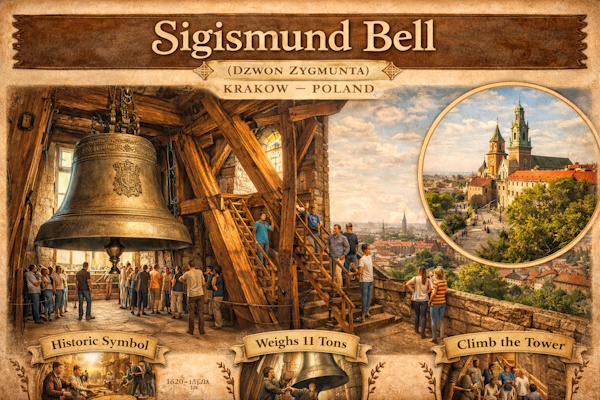
Located inside the cathedral’s bell tower on Wawel Hill, the bell is closely connected to major historic events and royal ceremonies. For many visitors, climbing to see the Sigismund Bell is a short but memorable part of a visit to Wawel Royal Castle and the cathedral complex.
Krakow Old Town & Wawel Tours
If you want historical context while visiting Wawel Cathedral and the Sigismund Bell, guided tours help connect the royal castle, cathedral and Old Town highlights.
Where is the Sigismund Bell located?
The Sigismund Bell is located inside the Sigismund Tower of Wawel Cathedral on Wawel Hill. The cathedral itself is part of the broader Wawel complex, which also includes Wawel Royal Castle.
From the Main Market Square (Rynek Główny), you can reach Wawel on foot in about 15–20 minutes. The walk is straightforward and passes through the historic Old Town.
History of the Sigismund Bell
The Sigismund Bell was cast in 1520 during the reign of King Sigismund I the Old. It was installed in the cathedral tower as a symbol of royal authority and national unity. Over the centuries, the bell has been rung during important moments in Polish history.
Traditionally, the bell is rung on major religious holidays, state events, and occasions of national significance. It is not rung daily, which makes the sound rare and symbolic rather than routine.
Because of its size and weight, several people are required to ring it. The bell has survived wars, partitions, and political changes, reinforcing its status as a national icon.
What makes the Sigismund Bell special?
- Historical significance: It is associated with Polish monarchs and national events.
- Symbolic value: The bell represents continuity in Polish history.
- Impressive size: It is one of the largest historic bells in Poland.
- Panoramic views: The climb to the tower offers views over Krakow.
Even visitors who are not particularly interested in bells often enjoy the experience because of the combination of history, architecture, and city views.
Climbing the Sigismund Tower
To see the bell, you must climb a narrow staircase inside the cathedral tower. The stairs are steep and can feel tight, so this visit may not be ideal for visitors with mobility limitations.
What to expect:
- Stone and wooden steps
- Limited space in the tower
- A close-up view of the bell
- City views from the upper level
The climb is relatively short but can feel physically demanding, especially in peak season when there are many visitors.
Tickets and practical information
The Sigismund Bell requires a cathedral tower ticket. Entry to Wawel Cathedral itself is generally free, but tower access is ticketed separately. Opening hours and ticket policies may vary depending on season and religious events.
Before planning your visit, it is helpful to check general opening patterns in the city: Krakow opening hours.
Hotels near Wawel and the Old Town
Staying near Wawel allows you to visit the Sigismund Bell early in the morning before larger crowds arrive.
Best time to visit
- Early morning: Fewer visitors and more comfortable climbing conditions.
- Weekdays: Generally less crowded than weekends.
- Outside peak summer: Spring and autumn often provide the most balanced experience.
During major religious holidays, access may be limited or visitor numbers may increase.
How long should you plan for the Sigismund Bell?
The tower visit itself usually takes 20–40 minutes, depending on queues and how long you stay at the top. Combined with a broader visit to Wawel Cathedral and the castle complex, you should plan at least 1.5–2 hours in total.
If you are including multiple sections of Wawel Royal Castle, consider allocating 2–3 hours for the entire hill area.
Combine the Sigismund Bell with nearby attractions
Because everything is within walking distance, the Sigismund Bell fits naturally into a half-day Wawel visit or a full Old Town itinerary.
Pros and cons
Pros
- Important national symbol
- Short but meaningful visit
- Good city views
- Easy to combine with Wawel attractions
Cons
- Narrow stairs and limited accessibility
- Can be crowded in peak season
- Separate ticket required
Is it worth visiting?
If you are already visiting Wawel Cathedral or the Royal Castle, the Sigismund Bell is worth adding to your plan. The visit is relatively short but provides historical depth and one of Krakow’s most symbolic experiences. If you are not interested in towers or climbing stairs, you can skip it without missing the core of Wawel — but for many travelers, the bell adds a memorable highlight.
FAQ – Sigismund Bell (Dzwon Zygmunta) Krakow
What is the Sigismund Bell?
The Sigismund Bell (Dzwon Zygmunta) is a historic church bell located in the Sigismund Tower of Wawel Cathedral in Krakow. It is one of Poland’s most important national symbols and is associated with royal and state ceremonies.
Where is the Sigismund Bell located?
The bell is inside Wawel Cathedral on Wawel Hill. It is part of the cathedral complex next to Wawel Royal Castle, within walking distance of the Old Town.
Do I need a ticket to see the Sigismund Bell?
Yes. While entry to Wawel Cathedral is generally free, access to the Sigismund Tower and the bell requires a separate ticket.
How much time should I plan for the visit?
The tower visit typically takes 20–40 minutes, depending on queues and how long you stay at the top. Combined with the cathedral and castle area, plan at least 1.5–2 hours.
How many steps are there to the Sigismund Bell?
The tower includes a narrow staircase with multiple stone and wooden steps. The climb is short but can feel steep and confined, especially during busy periods.
Can visitors ring the Sigismund Bell?
No. The bell is only rung on major religious holidays and important national events. It is not accessible for visitors to ring.
Why is the Sigismund Bell important?
The bell has been rung during significant historical moments in Poland. It symbolizes national continuity and royal heritage, making it one of the country’s most meaningful cultural monuments.
Is the Sigismund Bell suitable for children?
Older children can usually manage the climb. However, the narrow staircase may not be ideal for very young children or visitors with mobility limitations.
What is the best time to visit?
Early morning on a weekday is usually the most comfortable time to visit, especially in peak travel season. Summer afternoons can be crowded.
Can I combine the Sigismund Bell with other Wawel attractions?
Yes. Most visitors combine it with Wawel Cathedral, Dragon’s Cave, and a visit to Krakow Main Market Square on the same day.
Other articles in this guide about the Wawel complex:
- Wawel Hill (overview of buildings and sights)
- Wawel Castle
- Wawel Cathedral
- Dragon’s Cave Krakow